
With the upcoming workshop, I thought it would be fun to share a little more information about Kokedama!
1. Kokedama?!?
The Japanese word Kokedama translates to “moss ball” and refers to a traditional form of gardening that embraces the philosophy of Wabi-Sabi – an appreciation for the beauty of things that are imperfect, impermanent, and incomplete.
The distinctive round shape of a Kokedama is created by covering a plant's roots with soil and moss, then securing everything into a ball. You can display your Kokedama sitting on a decorative saucer or hang it from the ceiling. Personally, I love grouping several moss balls together for a bigger impact!
2. Making a Sturdier Kokedama
After making quite a few Kokedama, I've experimented with different ways to give them a little more support and structure. Making a traditional moss ball is relatively simple, but keeping everything intact can be the tricky part, especially once the Kokedama is repeatedly handled and watered.
I've experimented with several wrapping materials. Clear fishing wire works well, but it is annoying to tie in a knot, especially when you can't see it! I've found that tying a small piece of colored tape to one end helps keep it from disappearing while I'm working. I've also used sewing needles to help with the weaving process.
Of all the materials I've tried, twine is by far the easiest to wrap and tie. The downside? If you keep wrapping and wrapping, eventually you won't see much moss! Twine and fishing wire also have a breaking point, so the goal is to keep everything secure without going overboard.
I've also started using a few pieces of stronger-gauge wire as a sort of backbone for the moss ball. Depending on the size of the Kokedama, I use the right sized plastic nursery pot to help create the initial framework. The wire is shaped into something that looks a little like a simple spiderweb, and placing that framework into the pot helps create a nice, rounded shape before the moss is added.
Once everything is covered, the wire becomes part of the structure without being particularly noticeable. And if you do end up with a hole or a loose spot, don't panic! It is surprisingly easy to patch the area with a little more moss and rewrap it with clear wire.
A little Wabi-Sabi
The moss I use is found in uneven sheets, generally around 4-5 inches across, but each piece is hand-collected, cleaned, and dried locally. That means we're not going to find the perfect sheet of moss for every ball, but that makes it more fun. You can select mosses with a uniform color or create a patchwork with different shades.
I much prefer working with real, imperfect moss than trying to make every Kokedama look identical. Each one ends up with its own shape, texture, and little quirks. Very Wabi-Sabi.
3. How to Water Your Kokedama
Think of it as:
Soak → Drain → Display
When your Kokedama feels noticeably lighter or the moss ball feels dry, place the entire ball in a bowl or container of water. Allow the soil and root ball to rehydrate thoroughly, then remove it and let it drain completely before returning it to its saucer or hanging display.
Most plants can be submerged long enough to rehydrate the soil, but don't leave your Kokedama sitting in water for an extended period of time. The roots still need oxygen, and prolonged saturation can lead to root rot.
As a general starting point, 10-15 minutes is usually plenty. One of the easiest ways to learn when your Kokedama needs water is simply to pick it up. You'll quickly learn the difference between a freshly watered moss ball and one that is ready for a drink.
Watering frequency will vary depending on the plant, temperature, light, humidity, and how quickly your particular Kokedama dries out.
4. Keeping Your Kokedama Happy
Light: Match the light requirements of the individual plant.
Water: Soak when the moss ball has dried noticeably, then drain thoroughly.
Humidity: Many Kokedama appreciate some humidity, especially tropical plants.
Fertilizer: Feed lightly during the growing season according to the needs of your particular plant.
Moss: Occasional misting can help keep the moss looking fresh, but misting alone shouldn't replace watering the root ball.
And remember: the plant inside your Kokedama is still a plant! Its care needs don't change just because its home is a moss ball.
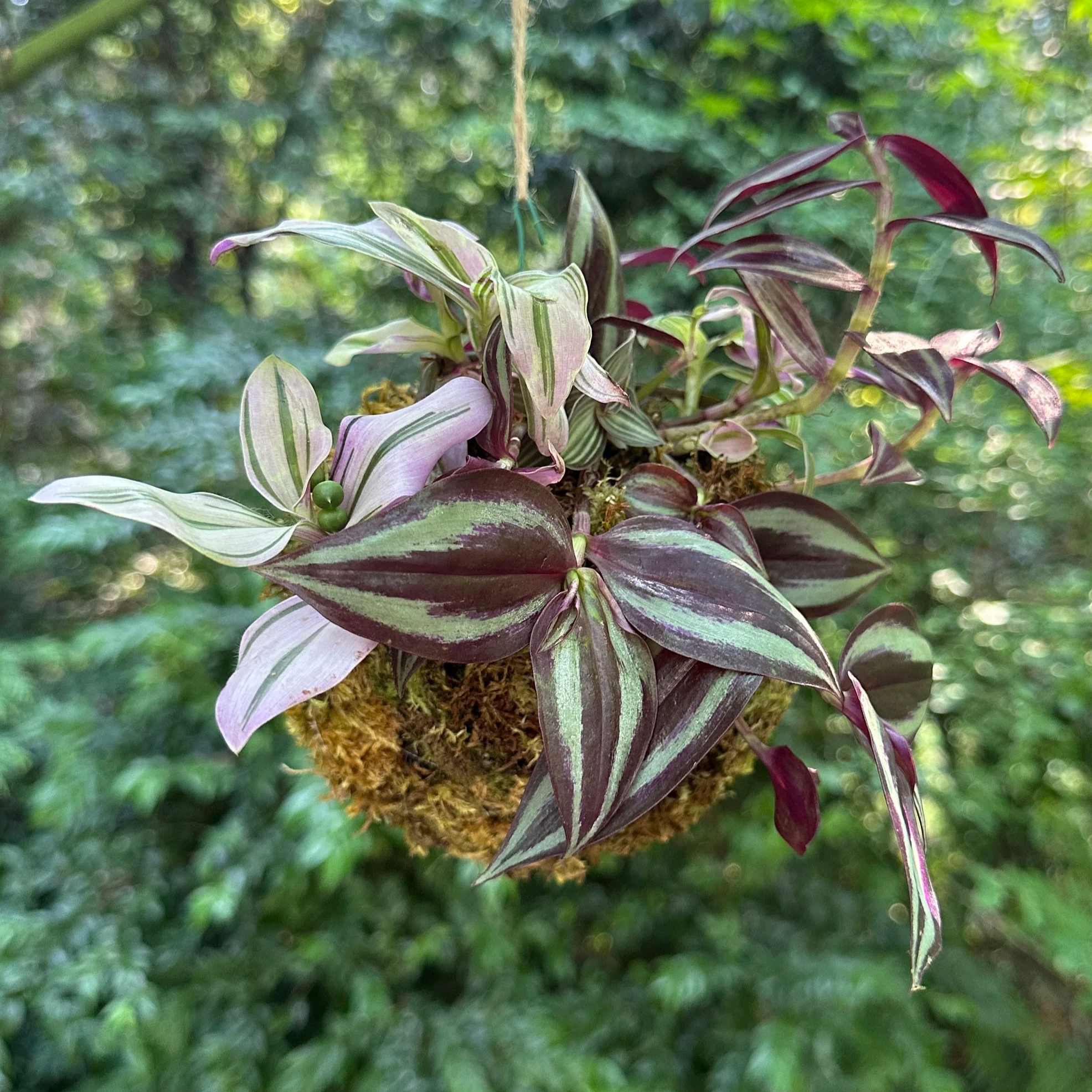
There's something especially satisfying about creating a living piece of art with your hands and then watching it change over time. Like a garden, a Kokedama is meant to change. The moss may grow, the plant will change with the seasons, and the ball itself will slowly take on its own character. That's part of the beauty.